Wonder Together
Wonder Situations · Parent-led pack
When Feelings Get Big
A story for storms of anger, sadness, or overwhelm.
Ages 3–9 · After a hard moment, or to practice before one happens.
A read-aloud story. Words to try. Room for your child.
Read it first. Keep what feels right.
The first parent page
Start before the busy moment.
Choose a quiet time to look at the story together. Let your child point, ask, or simply listen.
After a hard moment, or to practice before one happens.
Page 1 of 6
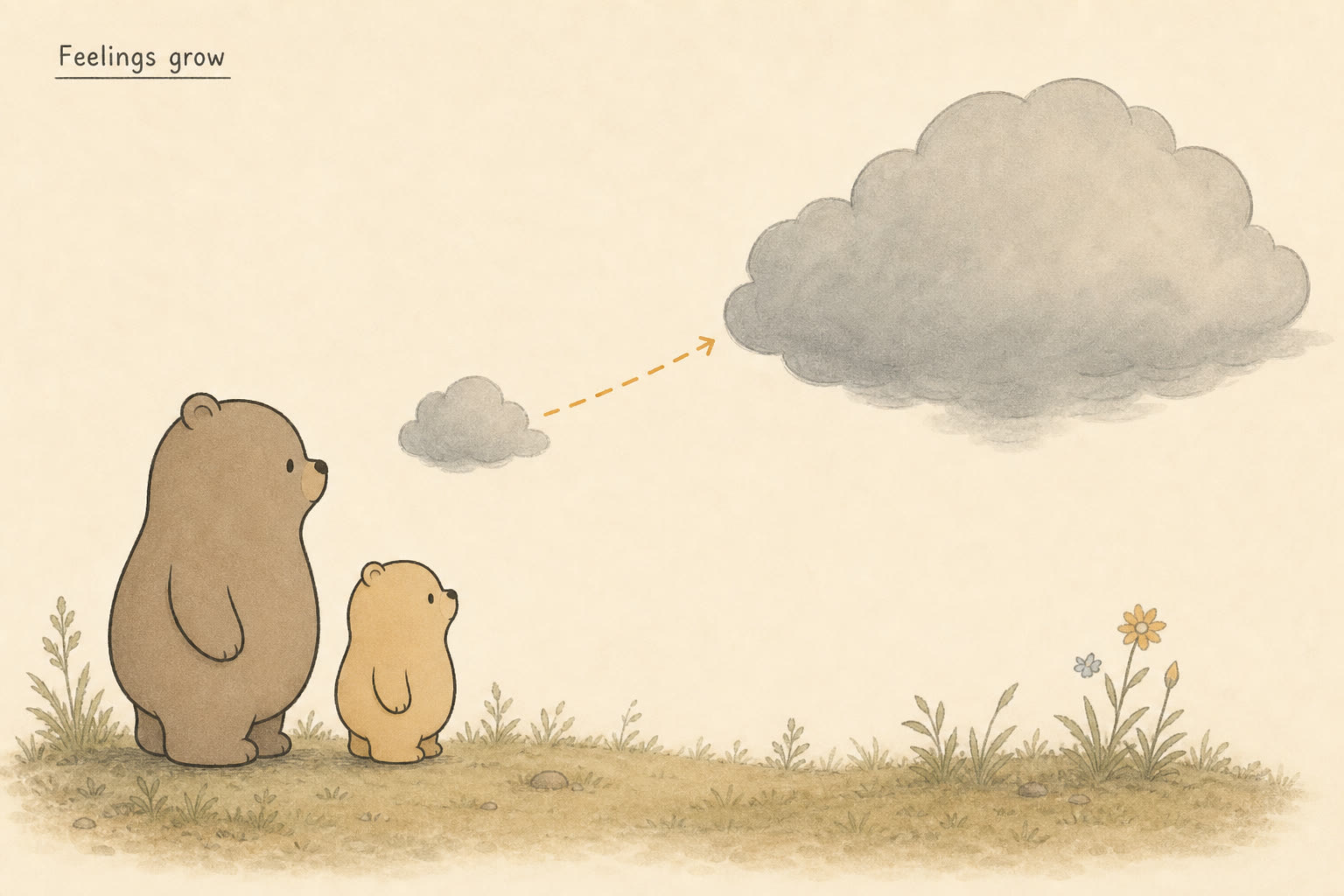
Feelings can grow fast
Sometimes a feeling starts small and then gets very big. Anger, sadness, worry, and frustration can all do this. The feeling is weather, not who you are.
Point together
- A small cloud can grow.
- The bigger cloud is still weather.
- The feeling is weather, not who you are.
Page 2 of 6
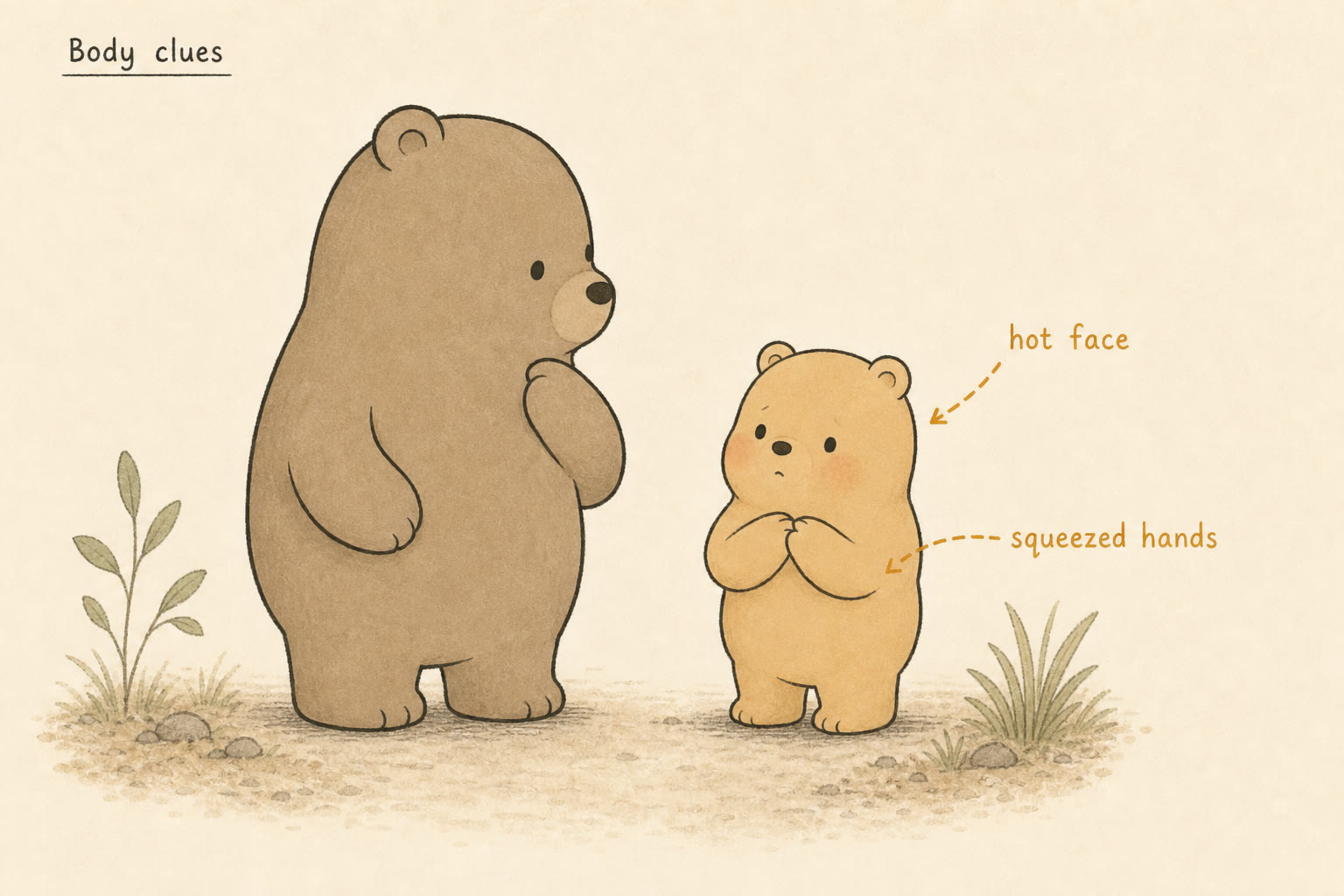
Your body gives clues
Your face may get hot. Your hands may squeeze. Your voice may get loud. These are clues your body is having a big feeling — not badness.
Point together
- Warm cheeks.
- Hands that squeeze.
- Clues, not badness.
Page 3 of 6
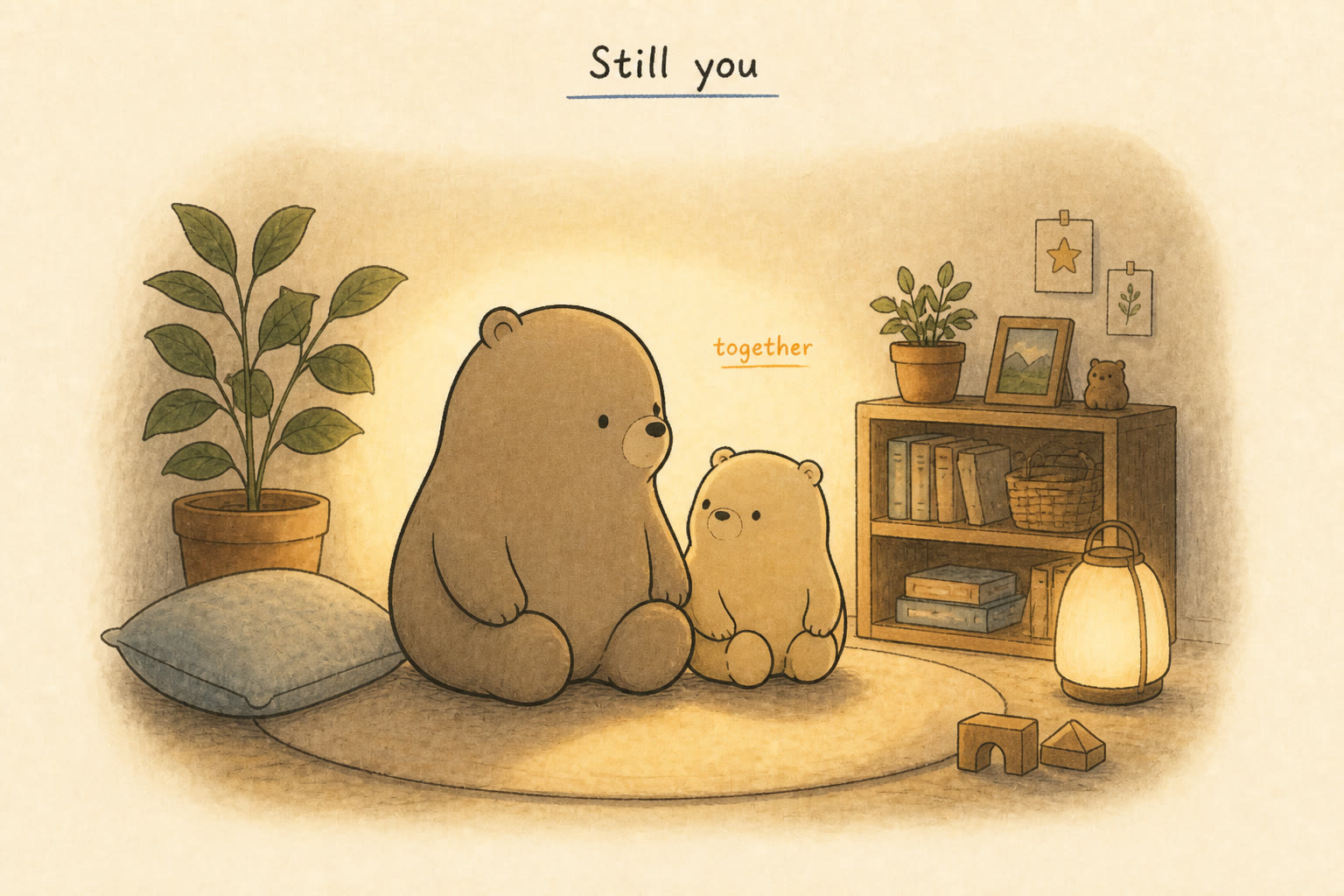
You are still you
Even when feelings are big, you are still you. A grownup can sit close and help you stay safe while the feeling moves through. You do not have to handle this alone.
Point together
- The quiet circle around both of you.
- Sitting close is the help.
- You do not have to handle this alone.
Page 4 of 6
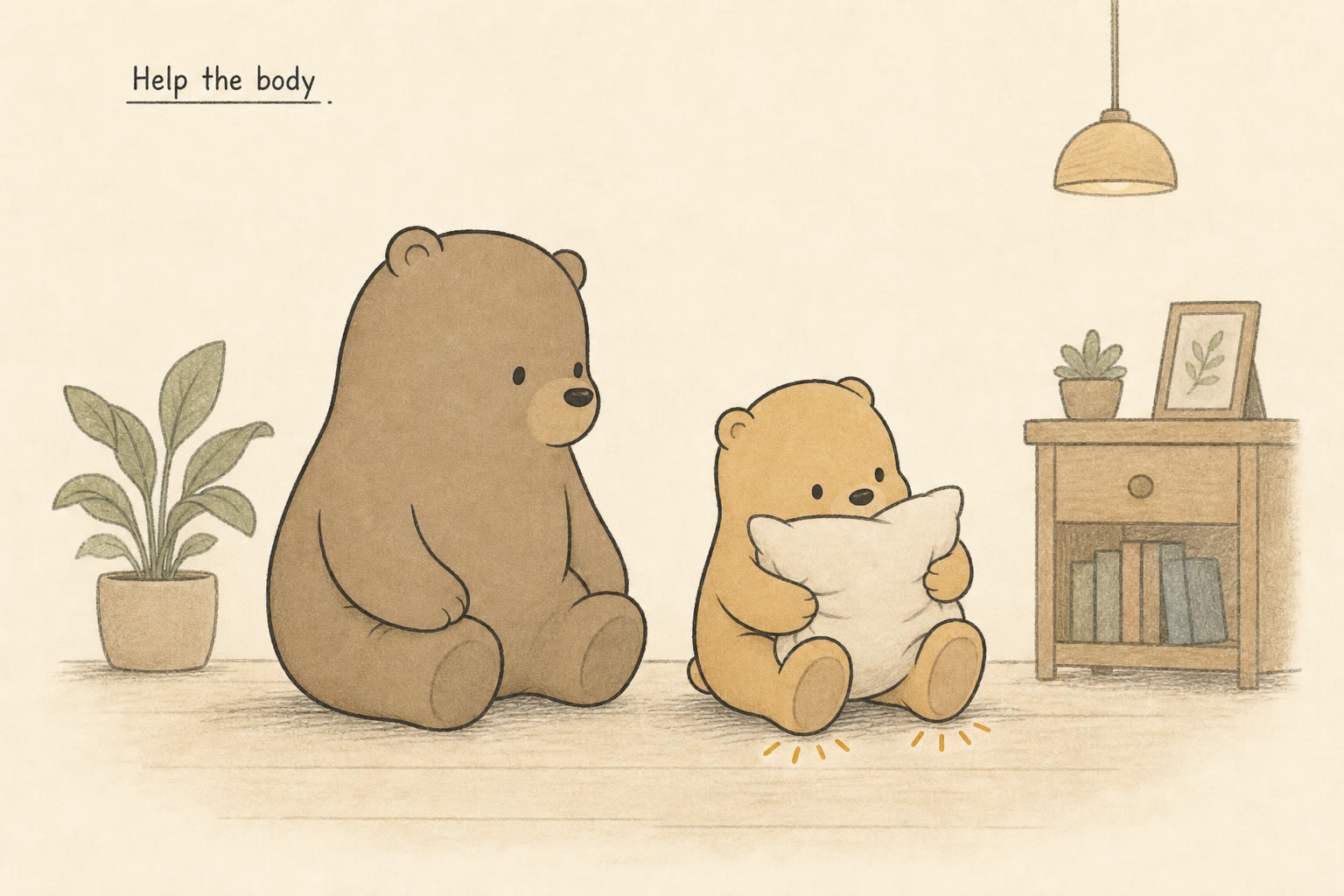
Ways to help your body
First we help your body. We can breathe slowly, press our feet into the floor, squeeze a pillow, or take space in a quiet spot. Body first, then words.
Point together
- Feet on the floor.
- A pillow to squeeze.
- Body first, then words.
Page 5 of 6
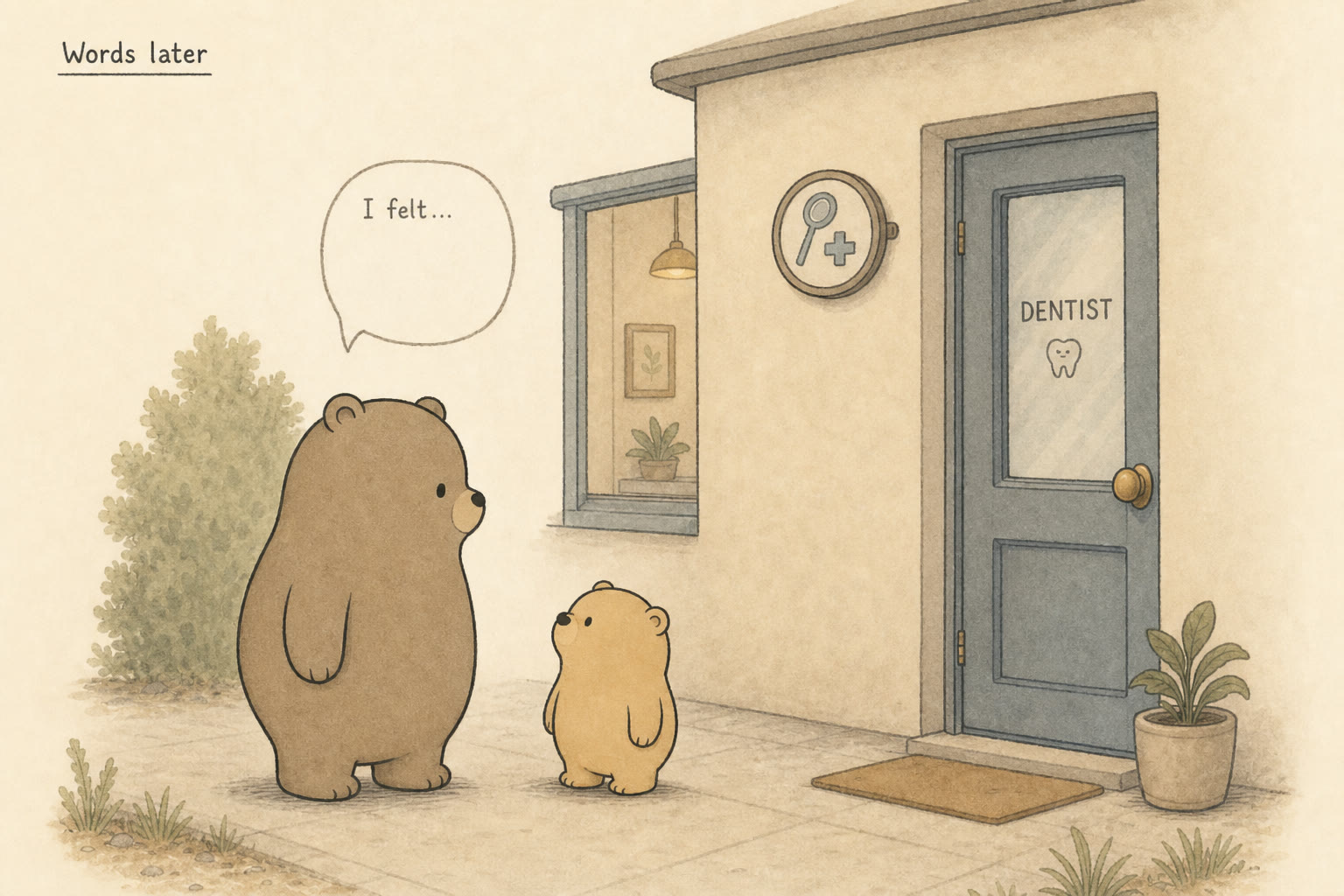
Words when you are ready
When your body feels a little calmer, we can use words: 'I felt mad because…' Words help grownups understand. You can start when you are ready, not while the weather is still huge.
Point together
- First the body, then the words.
- You can start with 'I felt…'
- Ready means calmer, not perfect.
Page 6 of 6
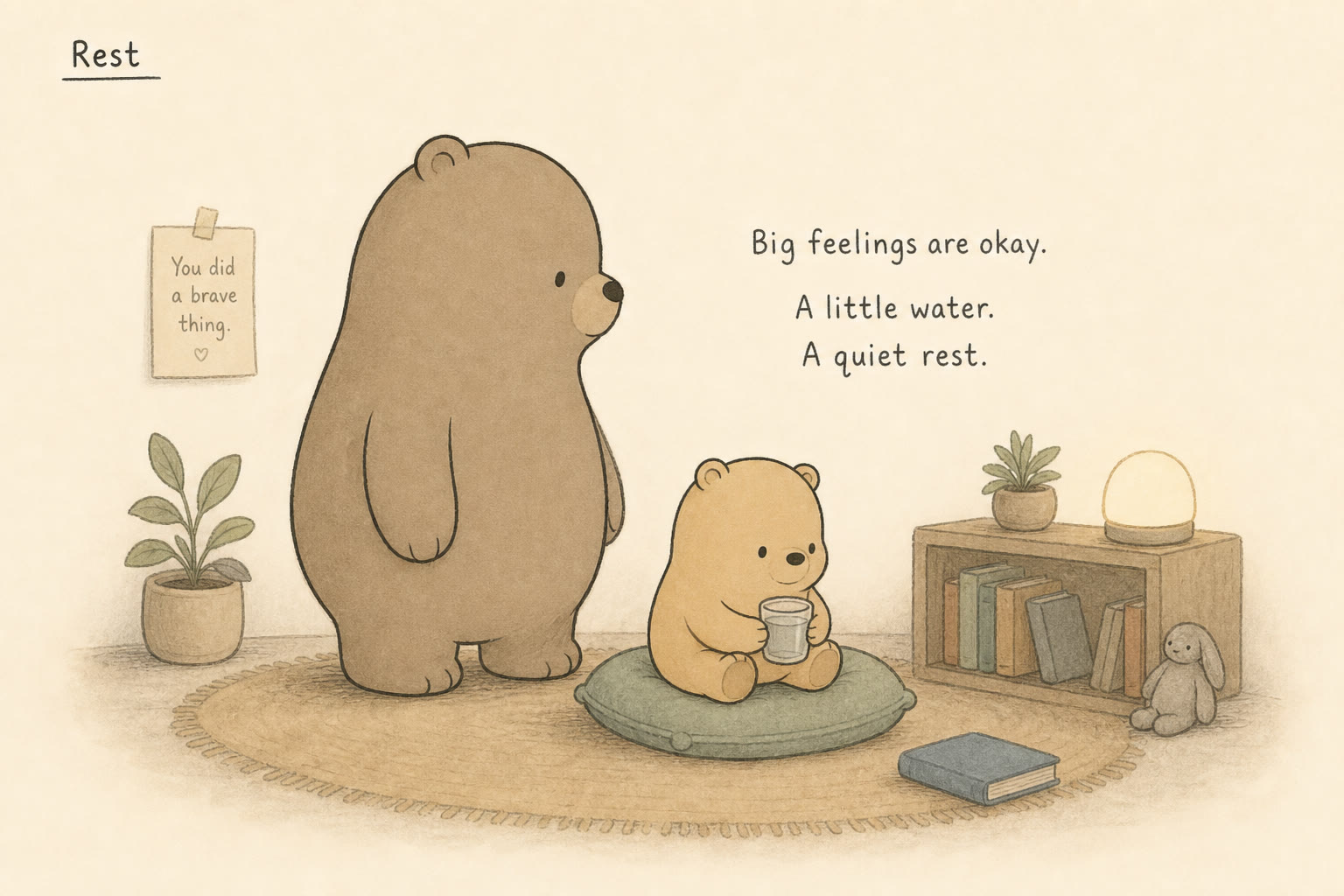
Repair and rest
After a big feeling, we can fix what needs fixing, have water, and rest. Big feelings do not last forever. The weather passes, and you are still you.
Point together
- Water.
- Rest after the weather passes.
- You are still you.
Keep these pages for you
Grownup pages
Parent script
- I'm here. You're safe. We can handle this together.
- First we help your body, then we talk.
- Feeling mad is okay. Hurting people or things is not the plan.
Try it together
Make a 'calm kit' box together: pillow, water bottle, paper, and one quiet toy.
Parent note
Co-regulate before you problem-solve. Kids can't use insight while flooded.